
October 2, 2023
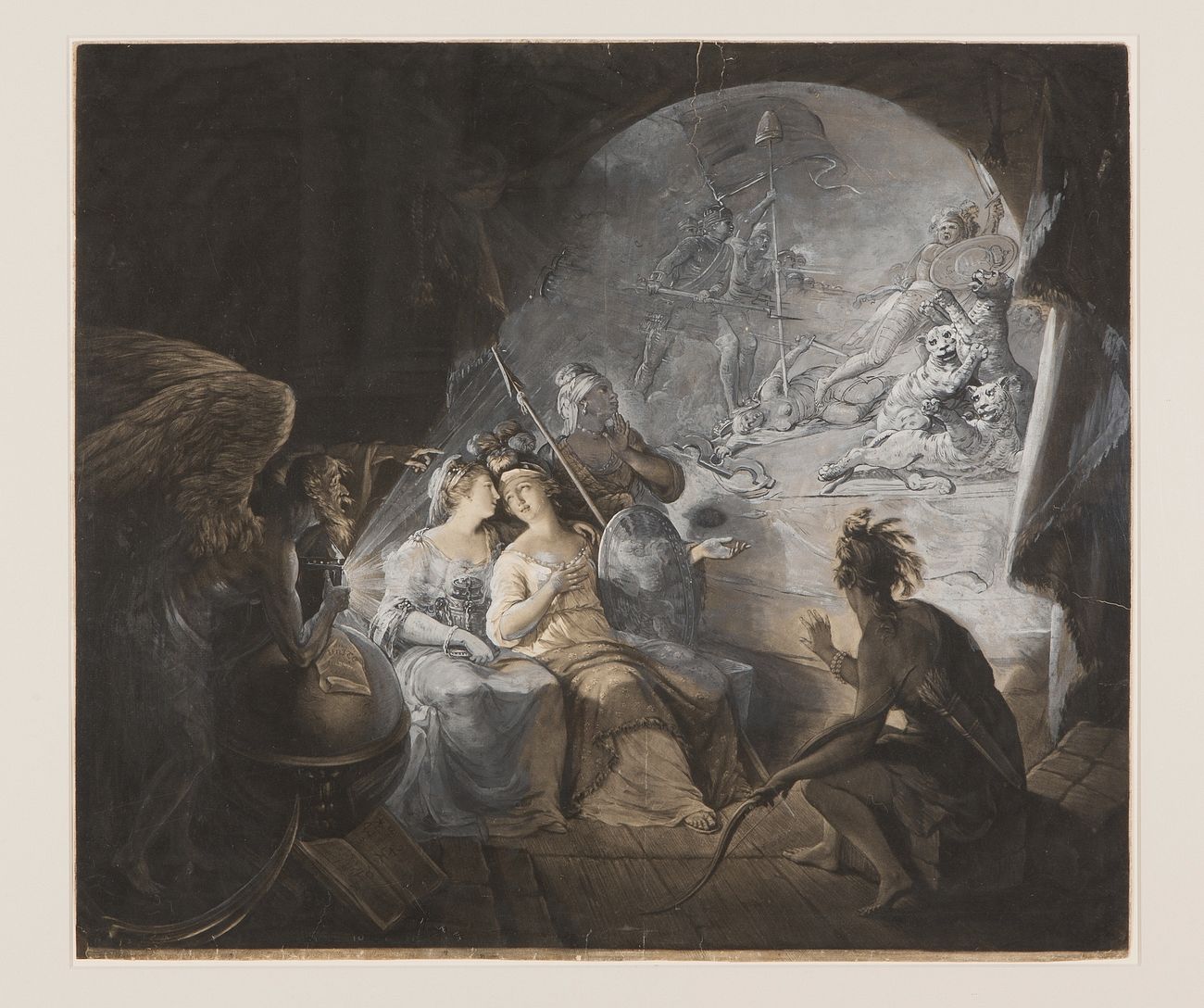
Another avenue into the big truth expressed by Fatal Certainty: How a Cult of Prediction Made the Twenty-First Century an Era of Strategic Shock – and How Rigorous Imagination Could Bring Us Back comes from ancient approaches to dealing with fundamental, irreducible uncertainty.
Decisions need to be made. This is a fact of life.
We will rarely have perfect certainty about the future. Another fact.
Decision-making under conditions of uncertainty actually has been scientifically proven to drain energy and deplete the mind’s ability to make further decisions. Fact number 3.
The upshot here is that stressful decisions for which we have inadequate certainty about outcomes have to be made every day.
Ancient peoples had far less certain information than even we have now. Yet they had to make a lot of the same decisions we do today: Should I take this business trip? Whom should I marry? Should I do this deal? Should I take our country to war?
The stress of making one high-stakes decision after another with virtually zero information led ancient peoples to devise methods that gave official sanction to choices made via what we would today regard as nonscientific and arbitrary means. These methods included oracles, seers, astrology, bibliomancy (consulting random passages in special books), the I Ching, the tossing of dice, and the reading of animal entrails.
As an expert on the Oracle of Delphi put it, the oracle was mainly consulted:
…in instances in which individuals, or a community, were having trouble reaching a consensus over which of a particular set of potential actions to take. It is this usefulness of an oracle at moments of community indecision that [helped turn] the Delphic oracle into such a well-known and important institution in the Greek world…. Indeed, the very process of deciding to consult Delphi, sending representatives to ask the question, waiting for one of the rare consultation days and potentially more than one if it was a very busy time, and then returning with a response that became part of a further debate meant a decision to consult Delphi substantially slowed down the decision process and gave the community much longer to mull over the issue.
Excerpt From: Michael Scott, “Delphi.” Apple Books. https://books.apple.com/us/book/delphi/id811568025
So part of the societal function of the Oracle of Delphi was to prevent societal paralysis.
Accepted academic wisdom, spreadsheets, algorithmic models, and financial projections fulfill, in today’s society, many of the same functions that oracles, astrology, and sortilege (dice-type casting of lots) did in ancient Greece and Mesopotamia and the Aztec empire.
A decision must be made about the future, and we just do not have the necessary information to make it. So a societally-approved mechanism is invoked and the appropriate “priests” (e.g., finance MBAs, econometricians, Russia or China “hands,” military intelligence analysts) are consulted for a reading.
It should be noted here that there is a gradually increasing number of phenomena that truly are predictable using science, math, and hard logic. Physical processes (astronomical events, chemical reactions, medical conditions, mechanical operations) can be and are understood at a causal level and reliably predicted.
But the phenomena of which I am speaking are not of this type of straightforward atomic or hydraulic process. Often they are, ultimately, “intersubjective realities,” agreed-upon fictions such as the dollar value of a particular financial instrument, popularly agreed interpretations of the law, ownership of property, nationality, fashion and consumer trends, or the policies of the Federal Reserve. These phenomena, not being physical, are not limited by the laws of physics. They can change without warning, and though they have no physical reality, they can have a huge impact on the physical world and the people occupying it.
Many of the academic and algorithmic models that are popularly used to explain reality to us today are attempts to use the sorts of logical or mathematical approaches of physics or astronomy, but on phenomena that are not ultimately bound by those logical or mathematical laws at all. This can work well for a long time, because the key in many cases is to create an “intersubjective reality” – a widely shared opinion as to what is or will be. (If you are, e.g., an investment guru, you want your particular intersubjective reality to hold for as long as possible.) As long as the intersubjective reality remains widely shared, the math or the logic will seem to hold.
But when opinion shifts, all the algorithms and academic logic in the world can’t save those trying to predict the unpredictable. Much as the ancient oracles or lots-casters would have seemed accurate, right up until they weren’t. (At least decisions got made.)There’s a different kind of rigor that actually can help with situations of truly irreducible uncertainty, however. Fatal Certainty was written to propose that we all get better at imaginative rigor. It’s a different type of rigor than that of the logicians or mathematicians. Theirs is “vertical,” precise. Rigorous imagination demands a “horizontal” appreciation of the full range of plausible futures.